
My yer bike! Australia must remove 5 million ice vehicles by 2035 as we do it on us
When I listened to Never Strays Far last week, I heard in an interview with the writer, adventure cyclist and courier Cuclier Emily Chapppell commentator British Tour de France.
Discasud safety, comfort and relief they feel when driving on a protected bike, although several used reminiscence about the old elbows of the elbows and fighting by London’s operation.
This is London cycling I remember and left 15 years ago. It is London cycling I grew up with, went to school and went to work with it.
This year I returned to London for a few months and it is clear that cycling has changed and has grown significantly. Cycling in London began to change, according to Mayor Ken Livingstone, preparation for the Olympics in 2012 presented the scheme of renting an anchored cycle.
This scheme allows you to pick up the bike cheaply on short roads around the city. Livingstone also introduced the Superhighway network of wide -protected lanes connecting outer and internal districts. This was introduced at the same time as the overload load that forced the driver to close the central London to pay for the privilege.
Surprisingly, another mayor, conservative Boris Johnson, continued this investment. The bike rental has become known as “Boris Bikes” when he expanded the scheme and the Superhighways cycle.
The works also began to remove many road systems designed in the 60s, 70s and 80s, which preferred cars over nozzles, pedestrians, taxis and bikes. The neighborhood, which was suffocated by the surrounding of Gyratory systems, became places where people wanted to live and work again.
Whatever Boris Johnson was, he was also a cyclist. Before he became the mayor, his office was in my neighborhood and often saw him bike to work. He even earned the frame of the respects of Cycle Couriers who gathered outside the pub, I lived above.
In the UK, active transport and cycling support became the key to managing the country towards clean zero and fighting air pollution that responded by an illegal and dangerous level in cities like London.
The current mayor, Sadiq Khan, introduced ultra -low emissions to pay the most polluting vehicles for their emissions, and the national government gave local authorities a building obligation to create space for active transport, such as walking and cycling.
The pandemic provided fresh imetus removal of traffic from residential areas. The low traffic neighborhood was a feature of the London sales in the 1970s – I grew up in one of the first – but the pandemic gave people the opportunity to consider where the species they want.
Vegetable boxes, shared bike shelters and even Kerbside EV loaders have replaced the parking space. From the race, nothing is perfect and still a lot is happening, but I wanted to emphasize the role that active transport can play during decarbonization and in creating better, more common cities.
Last weekend we heard that by 2035 it was necessary to switch to EV 5 million ice vehicles. However, we must actively make 5,000,000 ice vehicles from roads by 2035; What we replace them is up to us.
Active transport did not receive the same level of attention or support as in the UK. Federal, state and local strategies are partial.
We do not even have a clear standard to define what is a secure device for personal mobility or ebike, which led to fair and death. The infrastructure is partial and stops at the borders of the local administration. There is a strong infrastructure resistance.
Usually there is a belief that the removal of parking spaces to create a bicycle or pedestrian space will kill businesses.
Let me show you the income for every purchase I have made by bike. Some of the most disturbed people took the ideas of a 15 -minute city as a left -wing conspiracy for control and content. We will see: Being able to go to work, shops, surgery of the doctor and the library in 15 minutes or less liberation, not control.
There is also general skepticism about a role that active transport can play in the uncontrolled growth of our sparsely populated cities. Walking is good for trips less than a few kilometers; Cycling is good for a little further.
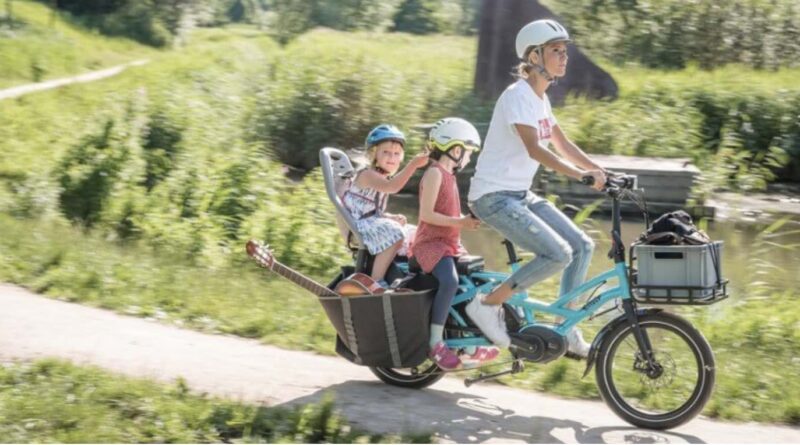
So what can achieve in cities that are 100 km wide? Where are the usual switching to tens of kilometers? And yet, anecdotically, I have never seen more people on a bike and score to work in my bubble, in my 15 -minute city. Foods, packages, and more arrive at the back of the wheel more often than not – people who earn a living are cycling.
Here’s a problem.
Australian data on active transport are uneven, outdated and consulting. I wanted to write a Dat-Drivent import to explore trends in active travel in Australia.
However, the Australian Transport and Rating-Sada framework, which is used to evaluate the infrastructure investment and restores the ratios and contain Formpert and outdated active traffic data.
We must make active transport part of our decarbonization agenda in this country. It must be taken into account into urban planning of towns that despair must accommodate more people in the Denesen communities, but we do not have a clear baseline from which we would understand the impact of investment.
London is not perfect; We can’t just copy what worked there because we need Australian solutions for an Australian context. But we can learn a lot and we have to start.

Ed Lynch-Bell is the main one in the second mouse, devoted to building more sustainable energy technologies and mobility products and businesses. ED is also co-owner of Melbourne and Sydney EV Meet-UD and combines e-mobility industry together.